What you're wearing actually means something
Every SAIDAM print has a source. Here is each symbol in short — and the pieces that carry it.
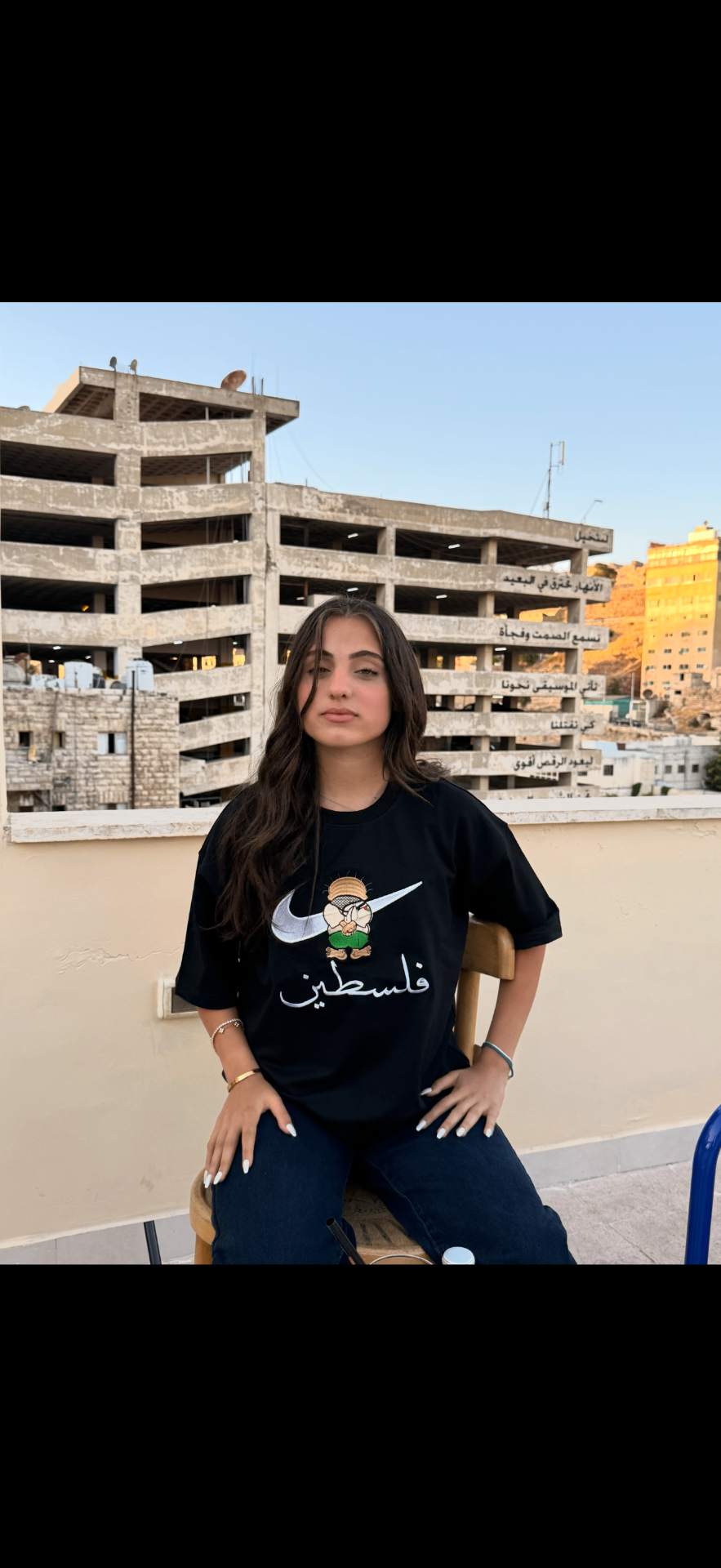
Handala — the boy who won't turn around
Drawn by Naji al-Ali in 1969, Handala is ten years old, barefoot, hands clasped behind his back. He refuses to show his face until Palestine is free — so we print him exactly as drawn, never softened.
The keffiyeh — a net, a road, an olive leaf
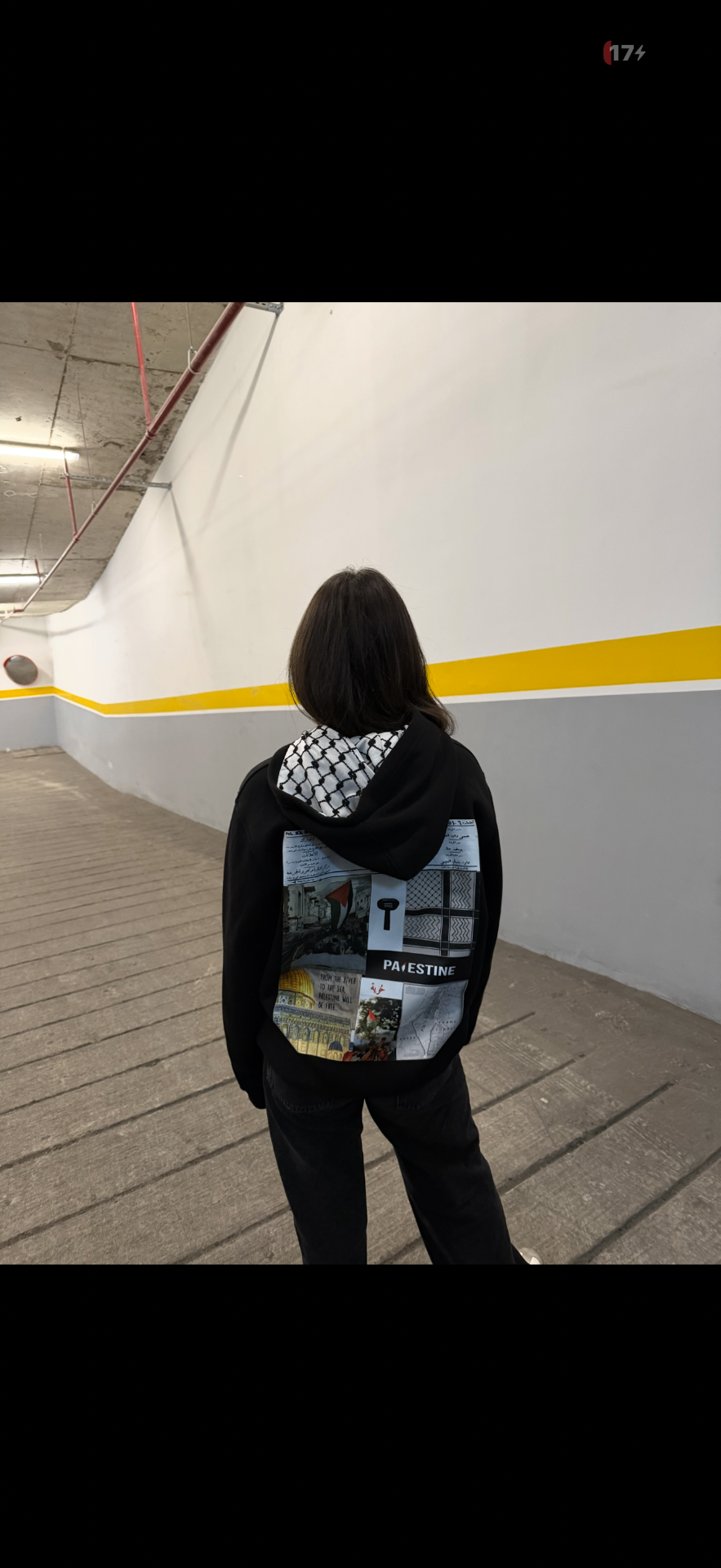
The woven pattern is read three ways: fishing nets for the coast, trade routes crossing the land, and olive leaves for the trees that outlive everyone. We put it on hoods and full-back panels.
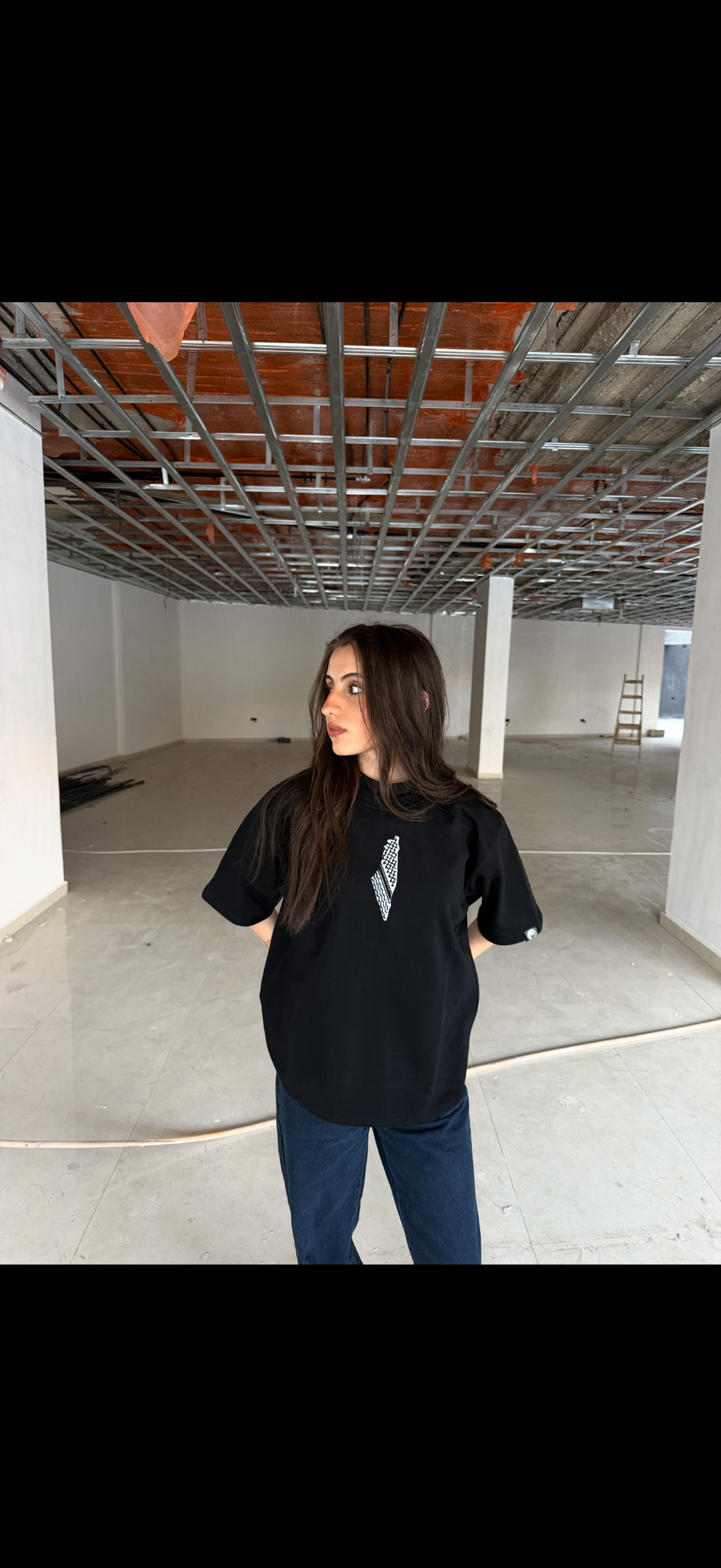
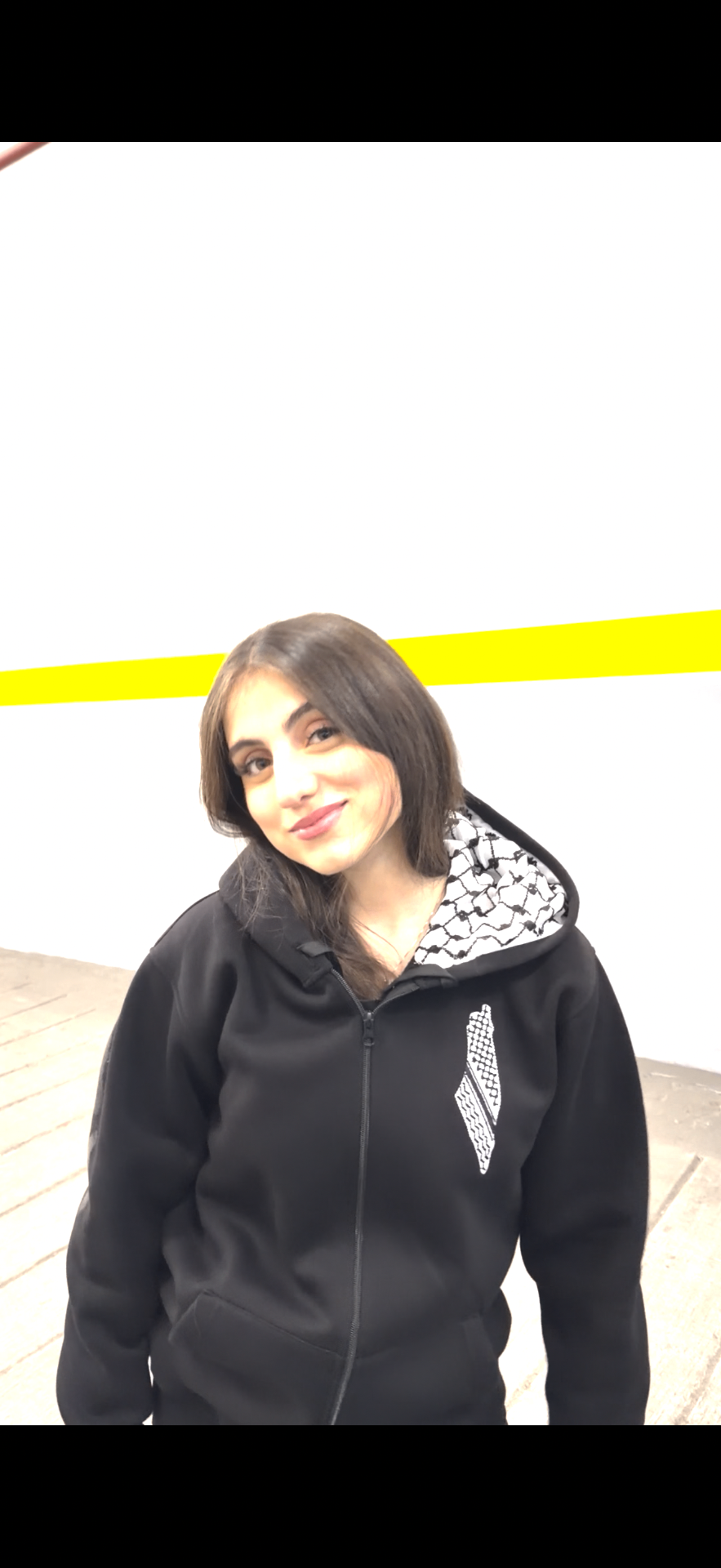
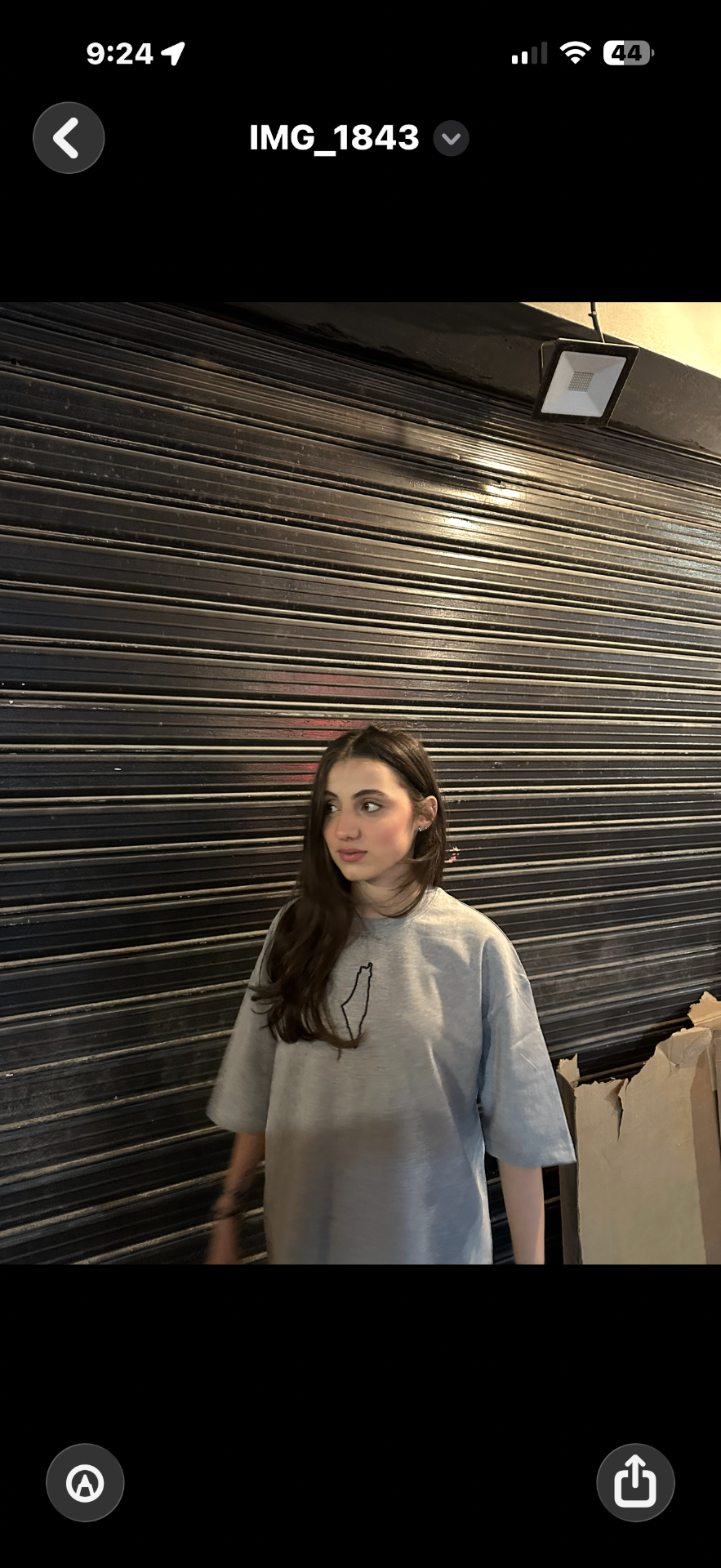
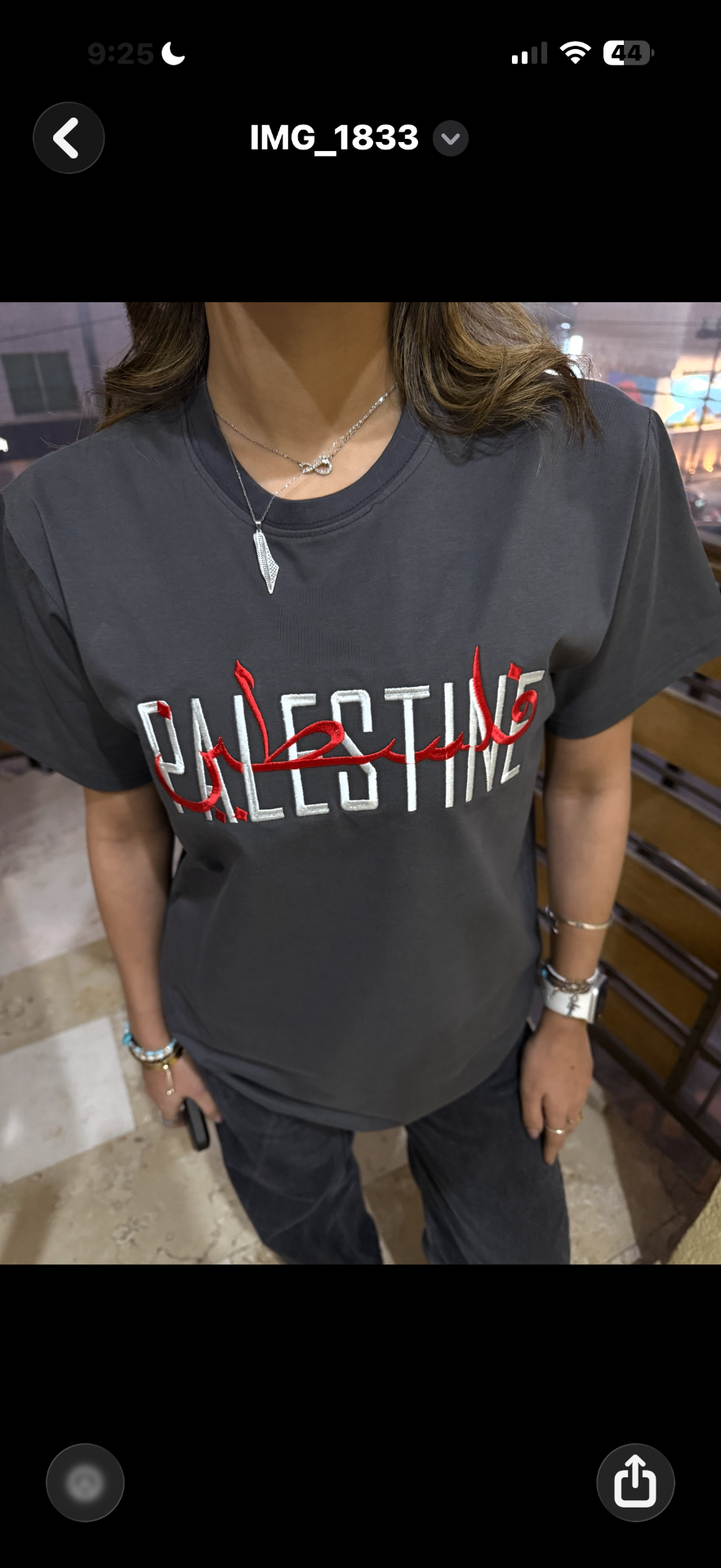
The map & the word فلسطين
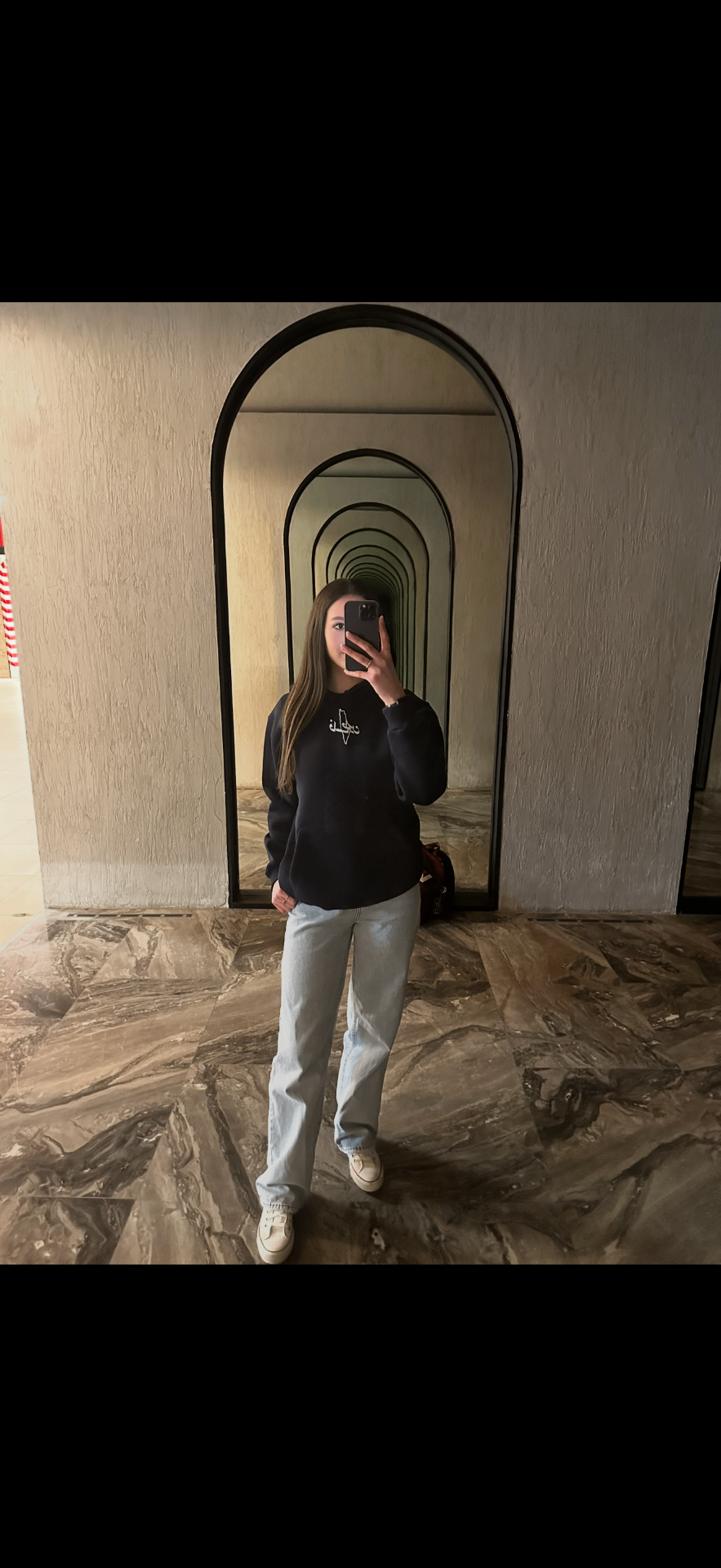
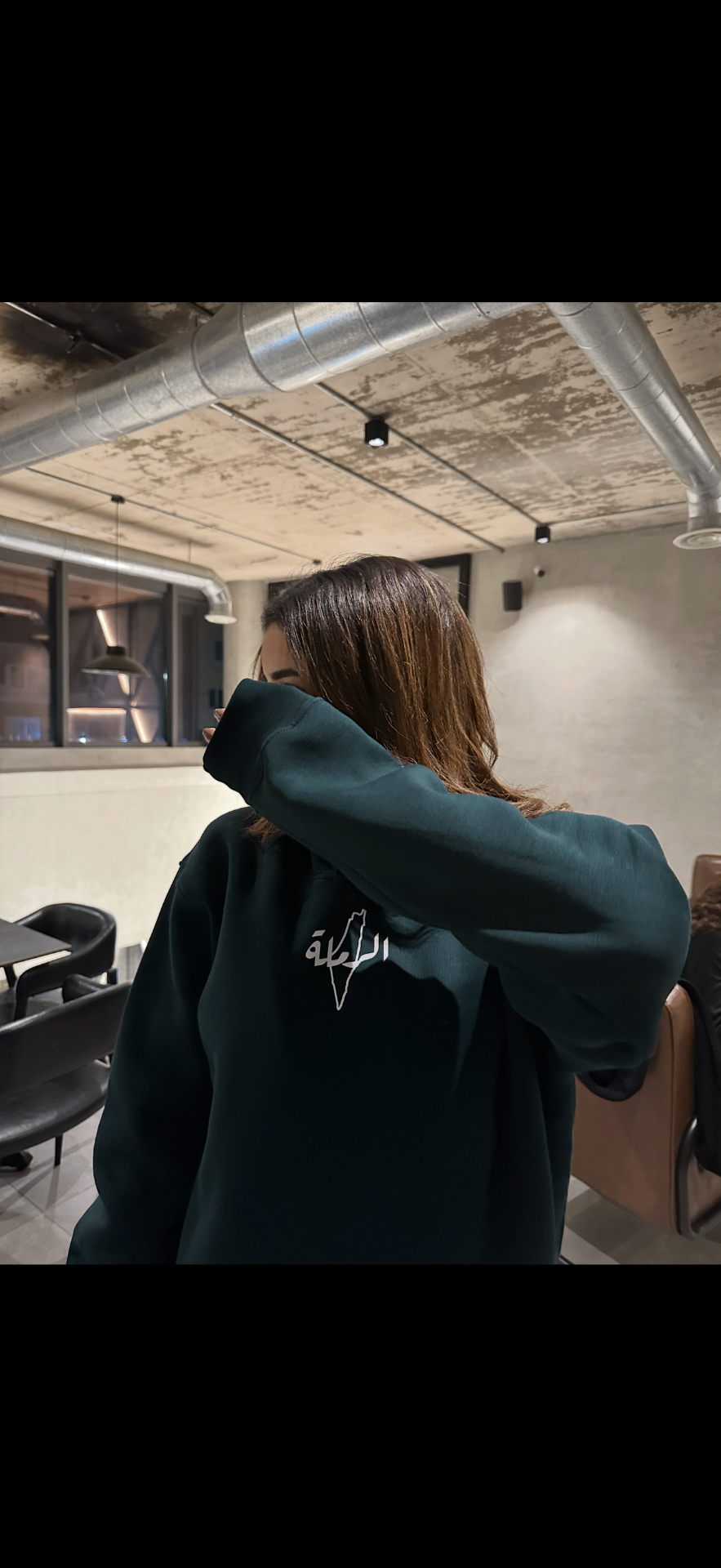
The outline and the Arabic word are printed without borders drawn through them — one shape, one name, from the river to the sea.
The archive collage
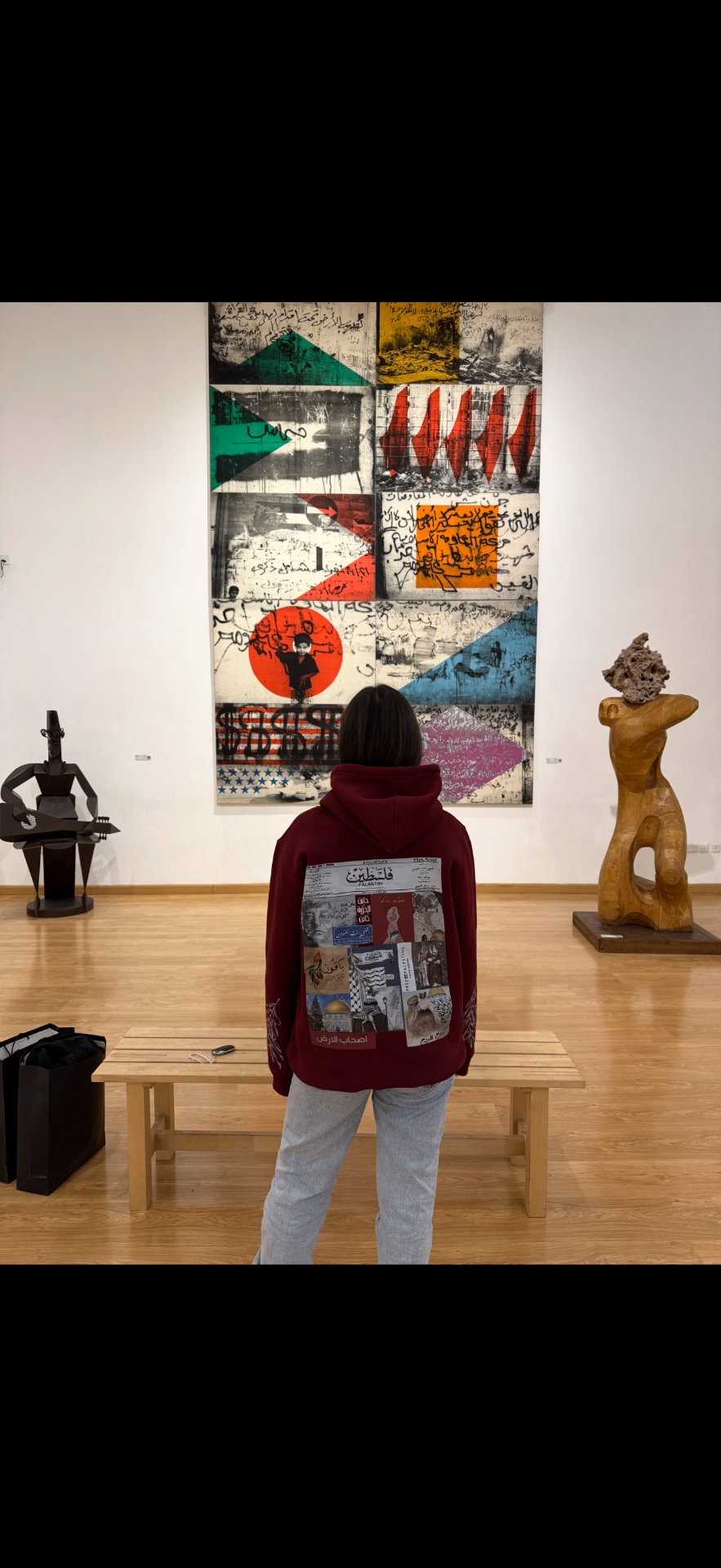
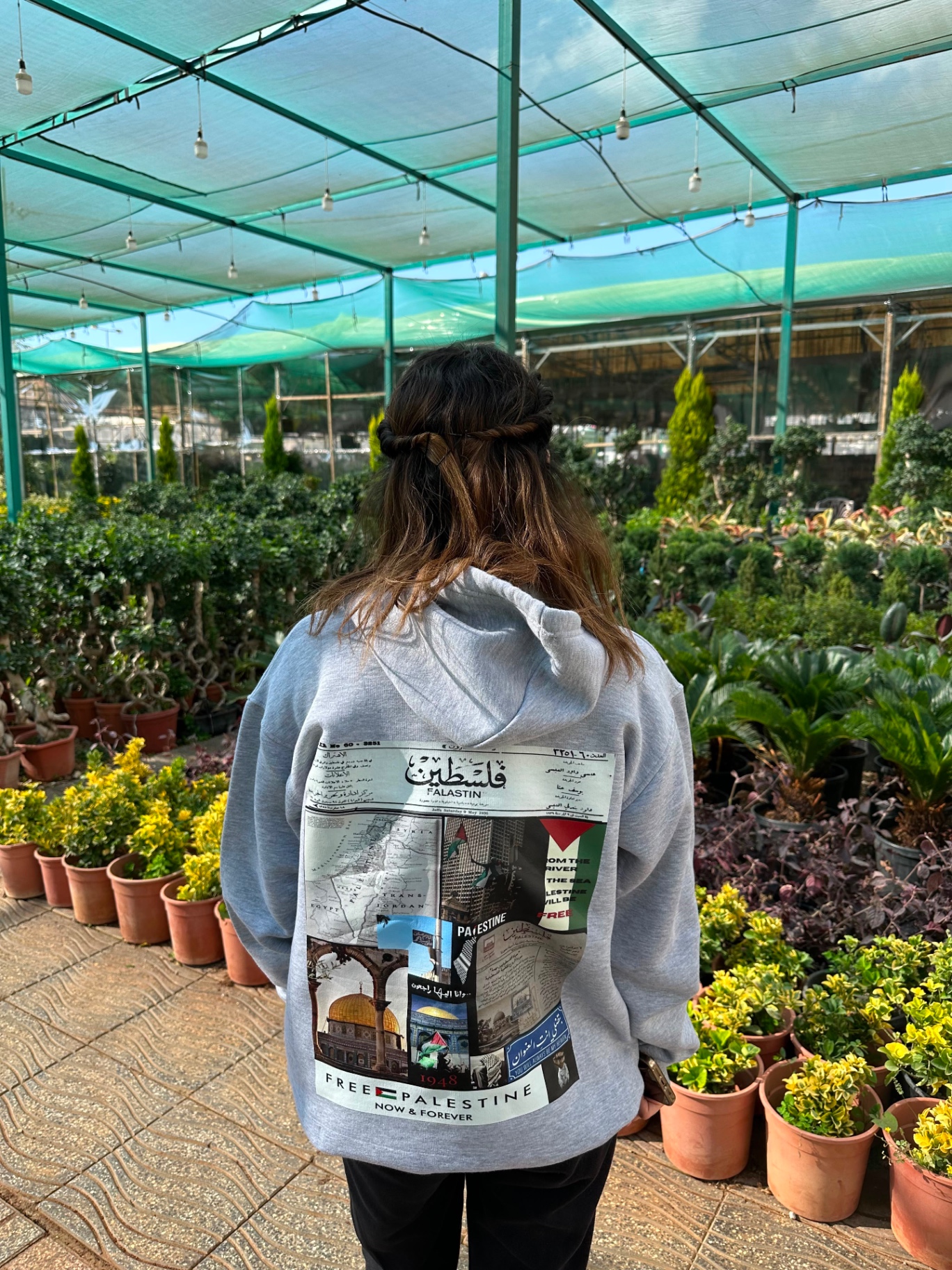
Photographs, newspaper cuts, embroidery motifs and city names layered together — the way memory actually looks: crowded, overlapping, refusing to be edited down.
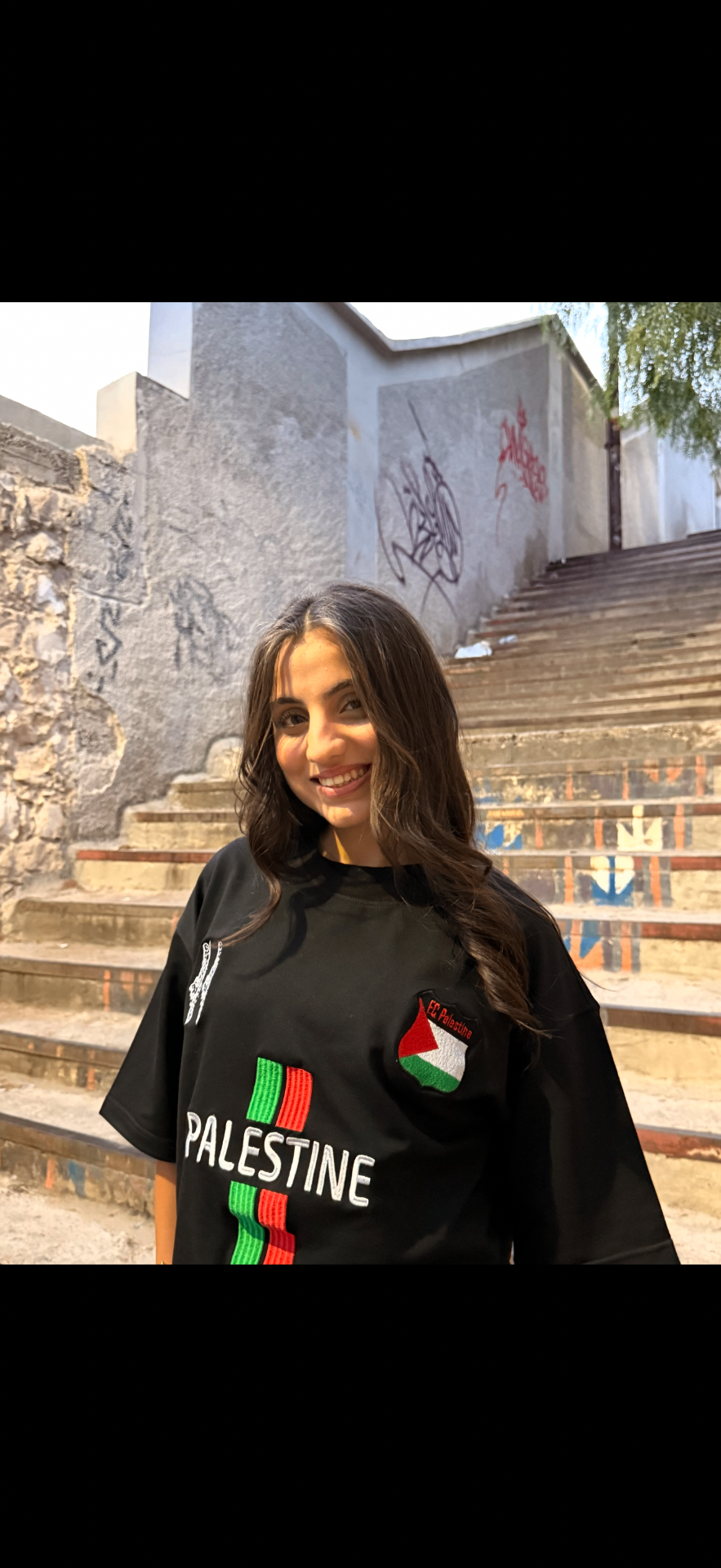
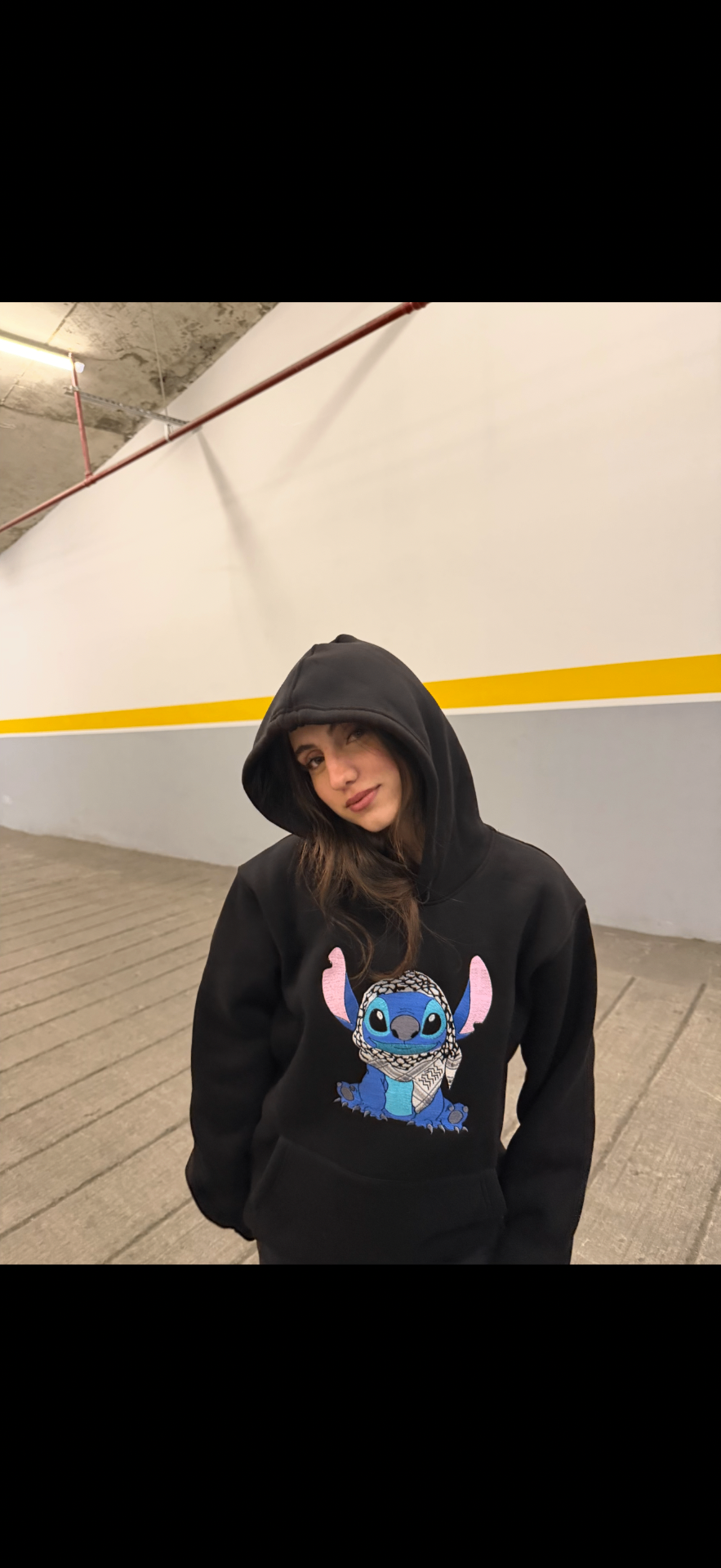
Tatreez — the stitch that names a village
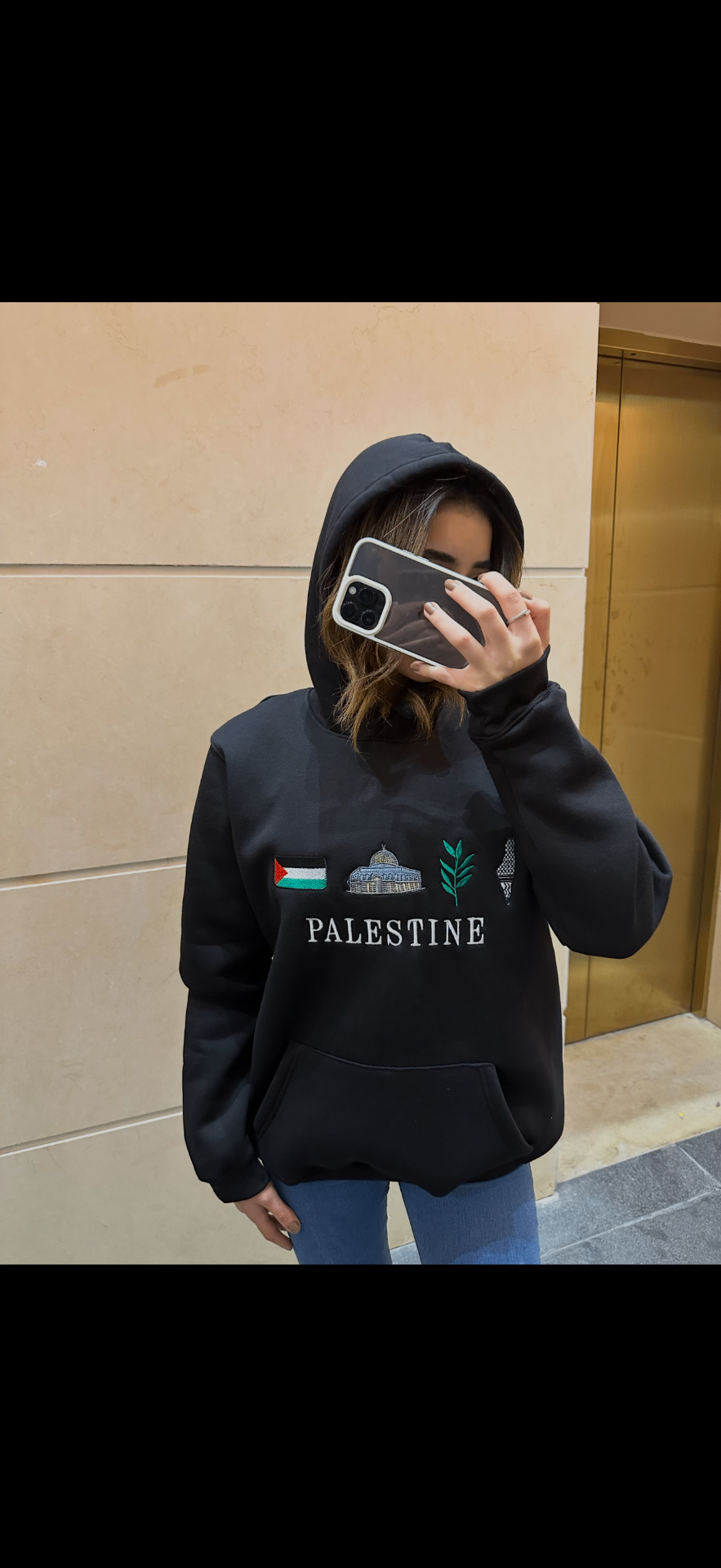
Every Palestinian village had its own embroidery motif, so a dress announced where a woman was from. We embroider those motifs directly onto chests and sleeves.